The Easing Cycle Is Over. Here's What a 4.35% World Rewards.
By Allcap Securities Investment Team (2 June 2026)
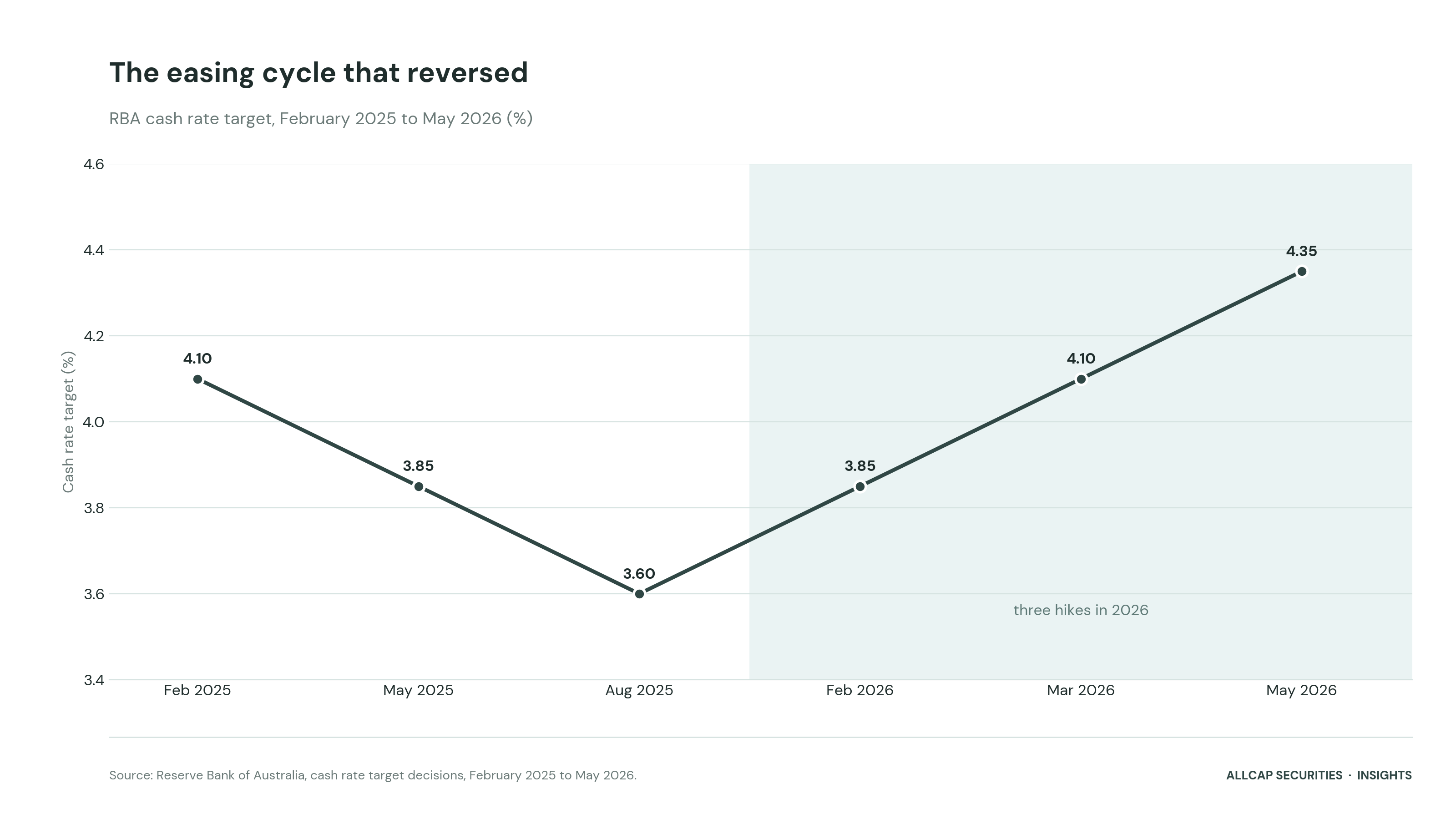
Twelve months ago, the debate was about how far the Reserve Bank would cut. Last month, it lifted the cash rate to 4.35 per cent, the third increase this year, and the language out of Martin Place has turned hawkish. The easing cycle of 2025 is not paused. It has reversed.
The drivers are now well documented. Inflation picked up materially in the second half of 2025 and has stayed above target, with headline CPI running at 3.8 per cent in the year to January. A global energy price shock has fed through fuel costs into the price of everything else. Capacity pressures, a tight labour market and chronically weak productivity growth have done the rest. The Bank's own forecasts do not see inflation back at the midpoint of the target band until late 2027.
What a higher-for-longer world rewards
Rising rates are usually described as bad news for investors. That is too simple. They are bad news for a particular kind of investing: the kind that depends on cheap debt, optimistic terminal values and exits timed to a falling rate cycle. That model had a very good decade and a very abrupt ending.
What holds up in a tightening cycle is different. Assets with contracted or regulated revenue that adjusts with inflation. Real assets with genuine scarcity value, where replacement cost rises as construction prices climb. Demand anchored in essentials: freight, energy, housing for workforces, storage. And structures that protect capital first, because in a 4.35 per cent world the margin for error on the downside matters more than the promise of upside.
The pipeline has not noticed
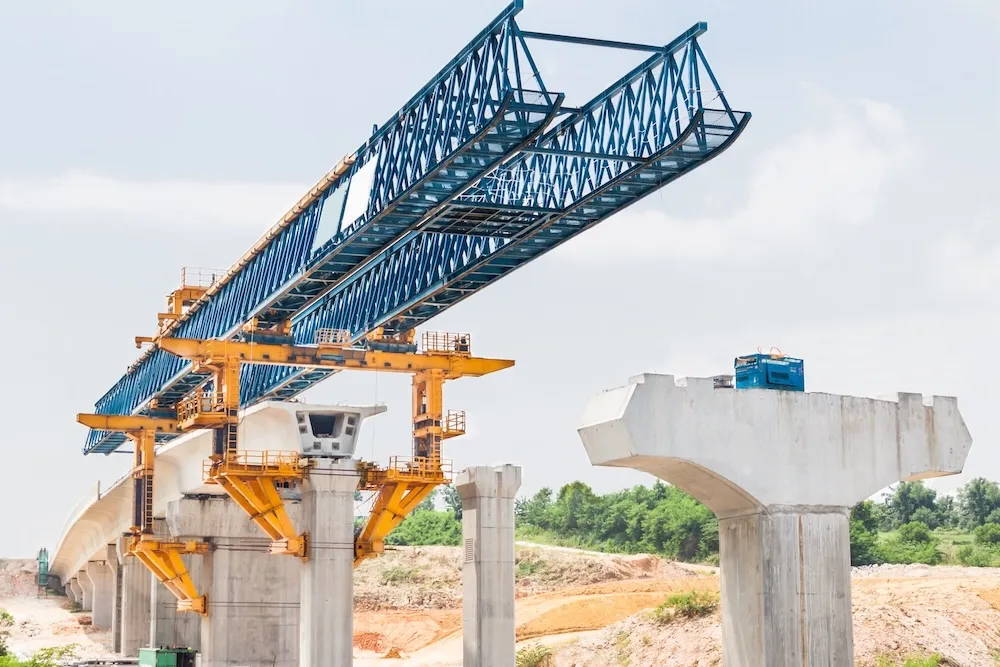
Here is the striking thing about this tightening cycle: the work that needs doing has not slowed at all. Australia's major public infrastructure pipeline sits at a record $242 billion over five years, according to Infrastructure Australia. Business investment is growing strongly even as the RBA deliberately cools household demand, a divergence the Bank noted explicitly in its March statement. Data centres alone are expected to dominate national business investment for the rest of the decade.
In other words, monetary policy is squeezing the speculative economy while the real economy of construction, logistics and energy keeps hiring. Capital placed in the path of that activity, in regions where the pipeline is funded and the workers are scarce, is not fighting the rate cycle. It is indifferent to it.
Discipline, again
We said a year ago that discipline is the strategy. A year of whipsawing rate expectations has only strengthened the point. Protect capital. Insist on structural demand. Invest where funded pipelines and physical scarcity meet. The investors being punished in 2026 are the ones who assumed 2025's easing was a trend. The ones being rewarded planned for both directions at once.
References
- Reserve Bank of Australia, Statement by the Monetary Policy Board, March 2026, and cash rate decisions of February, March and May 2026 lifting the target to 4.35 per cent (rba.gov.au).
- Commonwealth Bank newsroom, 'Reserve Bank lifts official cash rate to 4.1% at March meeting', 17 March 2026 (commbank.com.au).
- ABC News, 'IN FULL: RBA raises interest rates to 4.35%', May 2026, noting rates have returned to their February 2025 level (abc.net.au).
- Australian Bureau of Statistics, monthly CPI indicator: headline inflation of 3.8 per cent in the year to January 2026 (abs.gov.au).
- Infrastructure Australia, '2025 Infrastructure Market Capacity Report', November 2025: record $242 billion five-year major public infrastructure pipeline (infrastructureaustralia.gov.au).